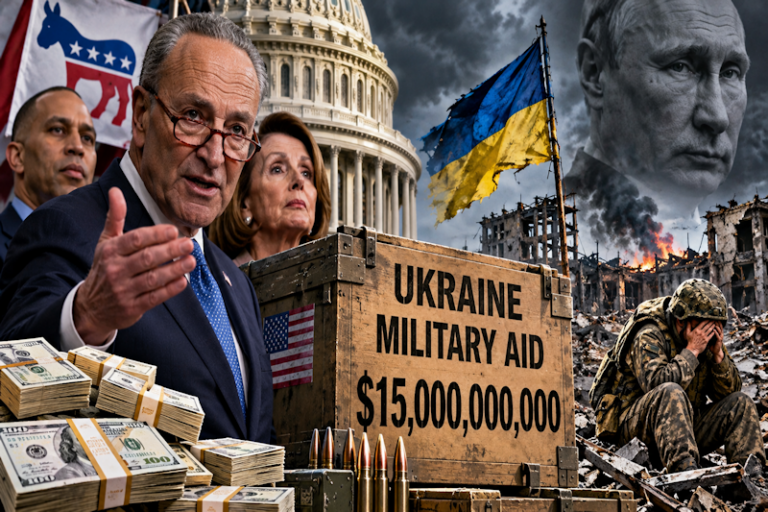
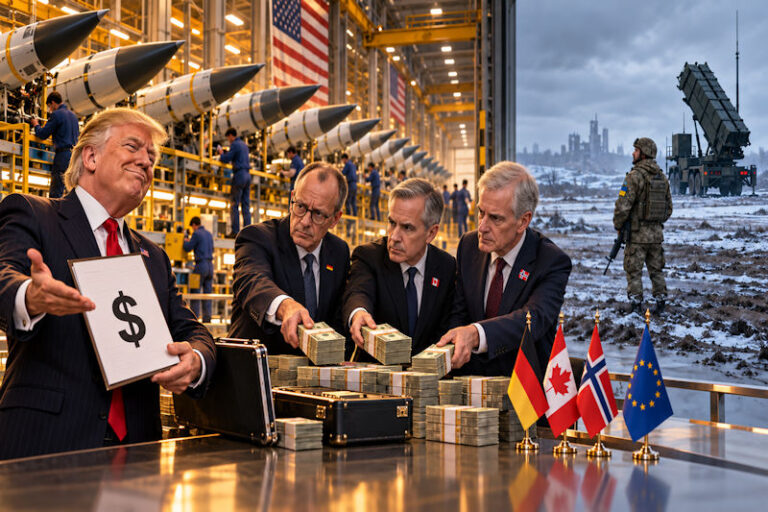
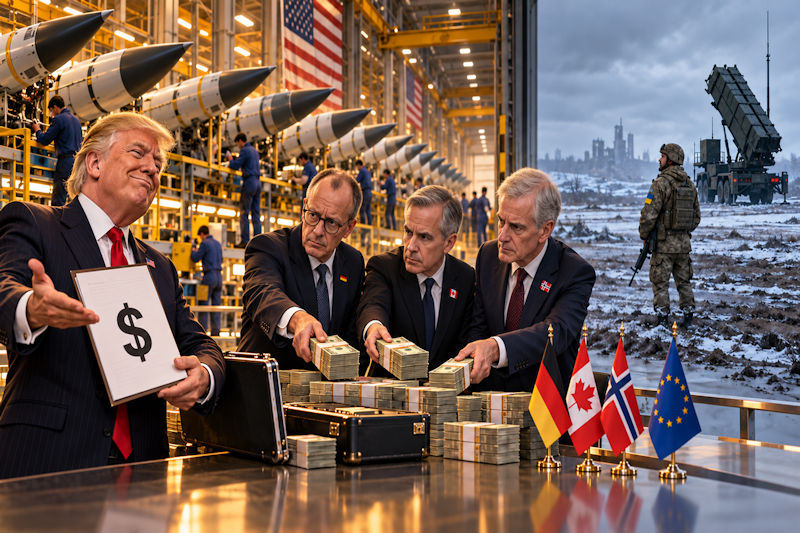
Billions for weapons, tougher sanctions against Russia and renewed debate over Ukraine’s technical infrastructure: according to the reported plans, US Democrats are preparing another $15 billion assistance package for Ukraine. But one essential question remains: how is any of this supposed to lead to lasting peace?
Another Multibillion-Dollar Package Is Being Prepared
According to the reported Financial Times account, Democrats are discussing a new Ukraine assistance package worth approximately $15 billion following the US midterm elections.
The proposal is not limited to weapons. Discussions reportedly include support for Ukraine’s energy infrastructure, air defense, intelligence cooperation, tighter sanctions on Russia and a review of Starlink satellite communications. Crucially, a proposal is not an enacted law, and no new $15 billion package should be described as approved simply because lawmakers are discussing it.
There can be a considerable distance between a political announcement in Washington and actual deliveries to Ukraine.
Billions Are Not a Strategy
Since Russia launched its full-scale invasion in February 2022, the United States has provided extensive military support to Ukraine. By mid-2026, major American assistance mechanisms included approximately $31.7 billion in authorized withdrawals of equipment from US stocks, $33.5 billion for procurement and $3.7 billion in military financing, according to Congressional Research Service reporting.
Supporters of further assistance argue that without Western equipment Ukraine would face even greater military pressure. Air defense systems, in particular, can protect Ukrainian cities and critical infrastructure from Russian attacks. That argument deserves serious consideration.
But it does not answer the central political question: what exactly is the intended end state of further weapons deliveries?
Is the goal to drive Russian forces out of all occupied territory? To maintain Ukraine’s defensive capabilities? To strengthen Kyiv’s bargaining position? Or to sustain a military effort while the parties remain far apart on the conditions for ending the war?
These are not interchangeable objectives. Anyone asking Congress to authorize another $15 billion should be able to explain the goal, the resources required and the conditions under which the assistance might eventually be reduced.
Sanctions as a Permanent Political Formula
Alongside military assistance, Democrats reportedly want to increase economic pressure on Russia. Here, too, effectiveness matters more than rhetoric.
Sanctions can disrupt trade, restrict financing and limit access to important technologies. They are not inherently ineffective. But sanctions alone do not compel a peace agreement, and they can encourage alternative markets and new trading relationships.
A credible sanctions strategy should therefore establish measurable objectives. Which Russian decisions is Washington trying to change? What would justify easing restrictions? And how can policymakers determine whether a particular measure is bringing its intended outcome closer?
Without such criteria, an instrument of pressure risks becoming a permanent policy whose success is rarely tested.
Donald Trump Remains a Decisive Factor
Congress has substantial authority over spending and oversight. Yet the president retains significant powers in the conduct of American foreign policy.
President Donald Trump can veto legislation, and overriding a presidential veto requires a two-thirds majority in both the House of Representatives and the Senate. As a result, any ambitious congressional initiative may require support across party lines.
Ukraine policy could once again become entangled in a domestic struggle for political influence. That would be particularly troubling if partisan confrontation displaced a serious discussion about the conditions for ending the war.
What Else Could $15 Billion Finance?
Fifteen billion dollars is not an abstract number. It is fifteen thousand million dollars.
Of course, a military assistance package cannot simply be converted dollar for dollar into domestic social spending. Some funds may pay American manufacturers, while other assistance may involve existing military inventories. Nevertheless, the following illustrative calculations show the scale of the amount under discussion.
| Illustrative alternative | What $15 billion could finance |
|---|---|
| Schools costing $30 million each | 500 schools |
| Hospitals costing $150 million each | 100 hospitals |
| Homes costing $100,000 each | 150,000 homes |
| Scholarships worth $50,000 each | 300,000 scholarships |
| Emergency grants worth $10,000 each | 1.5 million grants |
These are hypothetical arithmetic comparisons, not verified construction costs, funded programs or directly interchangeable budget allocations. Each row independently uses the full $15 billion.
The point is not that defense and civilian spending must always be pitted against each other. Governments have multiple obligations. The point is that military expenditure, too, deserves a transparent assessment of costs, benefits and achievable results.
Weapons Alone Cannot Produce Peace
Ukraine has the right to defend itself against Russia’s invasion. At the same time, it is entirely reasonable to ask how military defense can be translated into a sustainable political settlement.
Further weapons deliveries may preserve defensive capabilities in the short term. Whether they improve the prospects for negotiations in the longer term depends on battlefield developments, the objectives of both sides and their willingness to make concessions.
A responsible American strategy should therefore connect military support with concrete diplomatic initiatives: talks about security guarantees, verifiable ceasefire arrangements, humanitarian measures and possible international monitoring mechanisms.
Without a diplomatic perspective, there is a risk of continually committing new resources without making comparable progress toward the stated objective of a lasting peace.
Conclusion: The Essential Question Remains Unanswered
The proposed $15 billion remains a political initiative, not an enacted package. If approved and implemented, additional assistance could strengthen Ukraine’s defenses, particularly its ability to protect civilians from aerial attacks.
But supporting a country under attack does not exempt Washington from explaining the long-term consequences of its decisions.
After years of war, American policymakers should be able to offer more than larger funding figures, additional sanctions and mutual accusations.
The quality of a strategy is not measured by the size of the next assistance package. It is measured by whether policymakers can explain how that package contributes to a lasting peace.
Until that question is answered, the debate over another $15 billion remains politically incomplete.
Sources
Financial Times (reported proposal) · Congressional Research Service: US Security Assistance to Ukraine.
Hashtags: #USA #Ukraine #Russia #Democrats #Trump #MilitaryAid #WeaponsDeliveries #PeaceDiplomacy #Sanctions #USCongress #Geopolitics #Rabenspiegel

Über den Autor